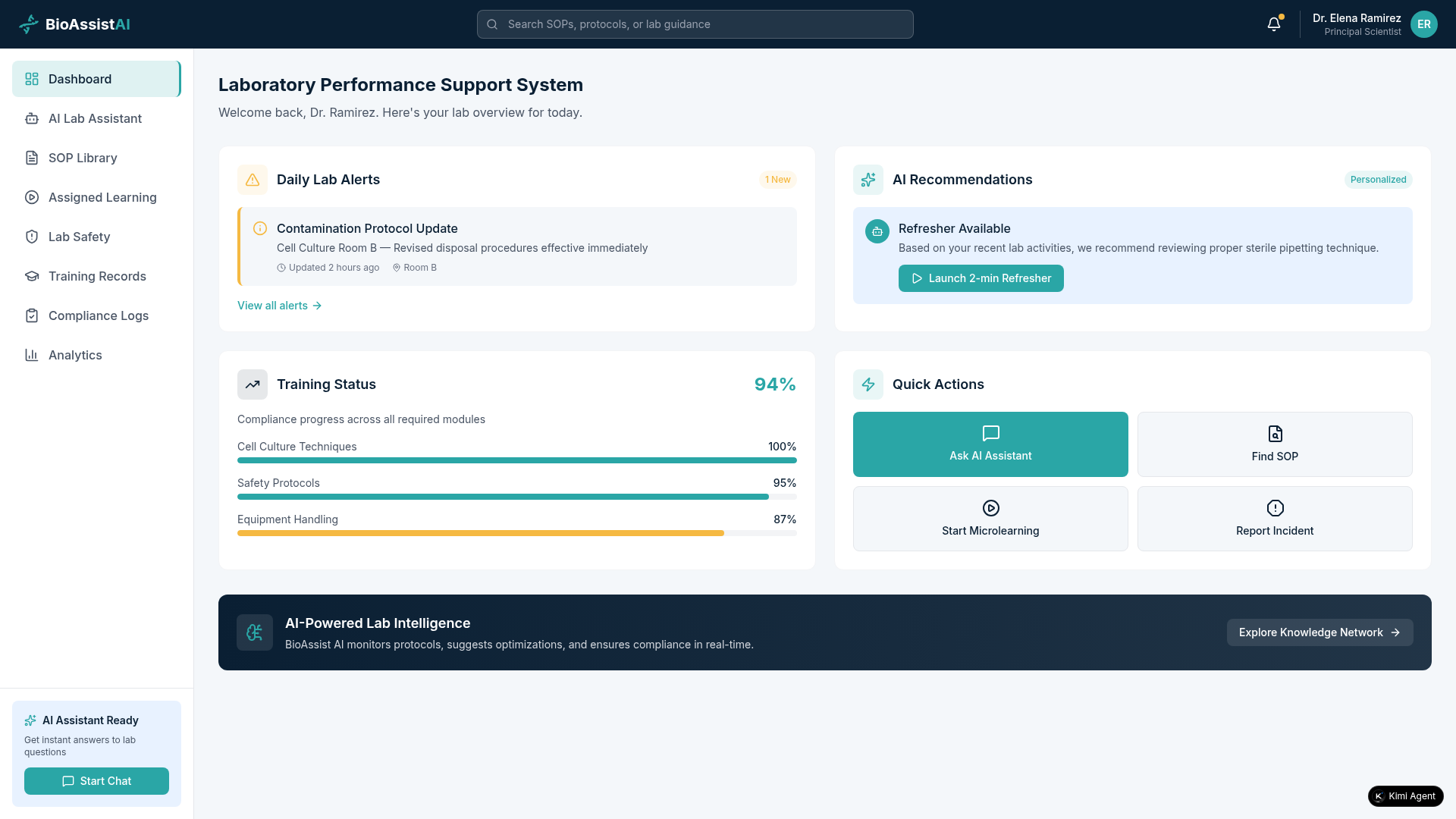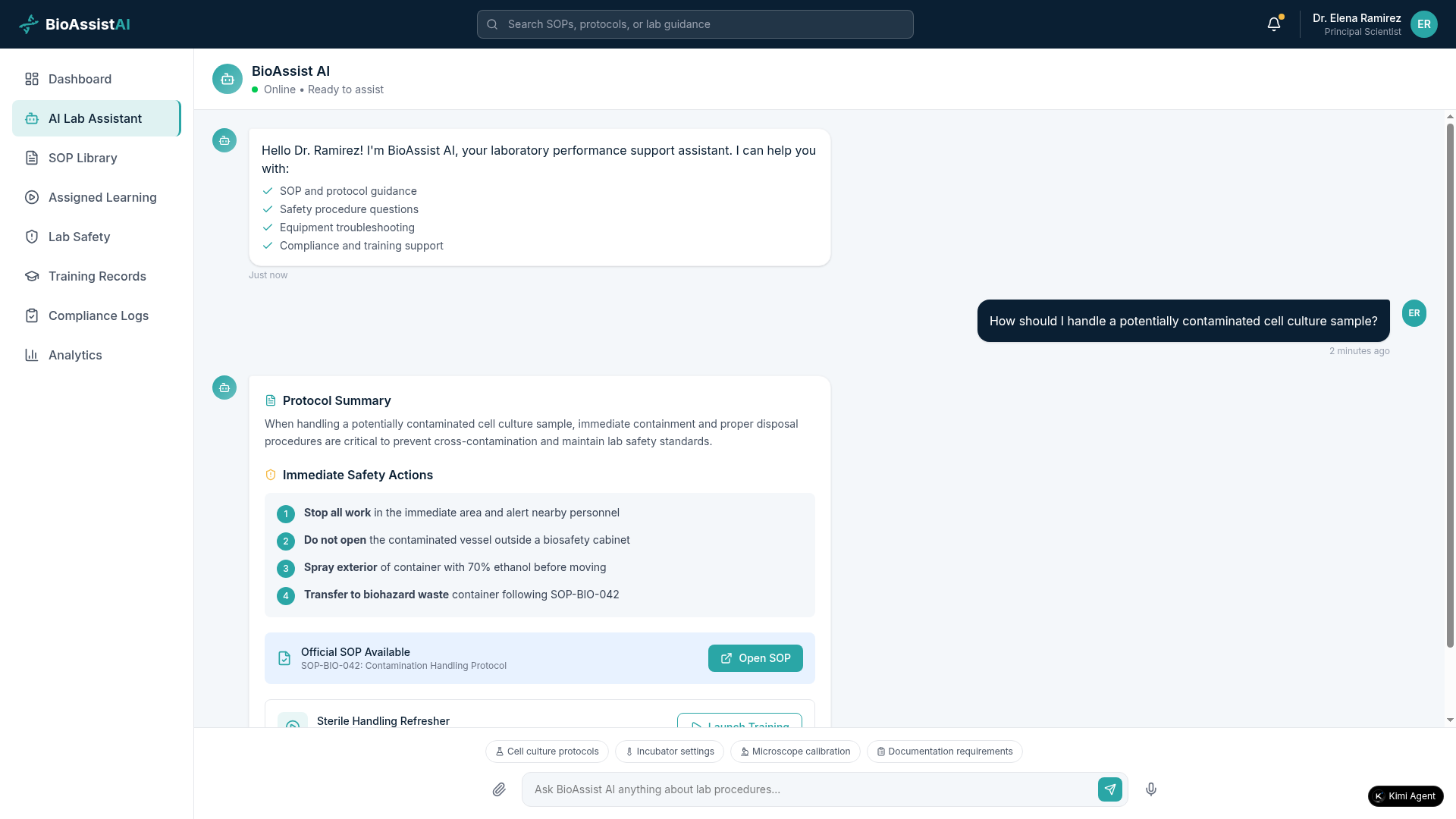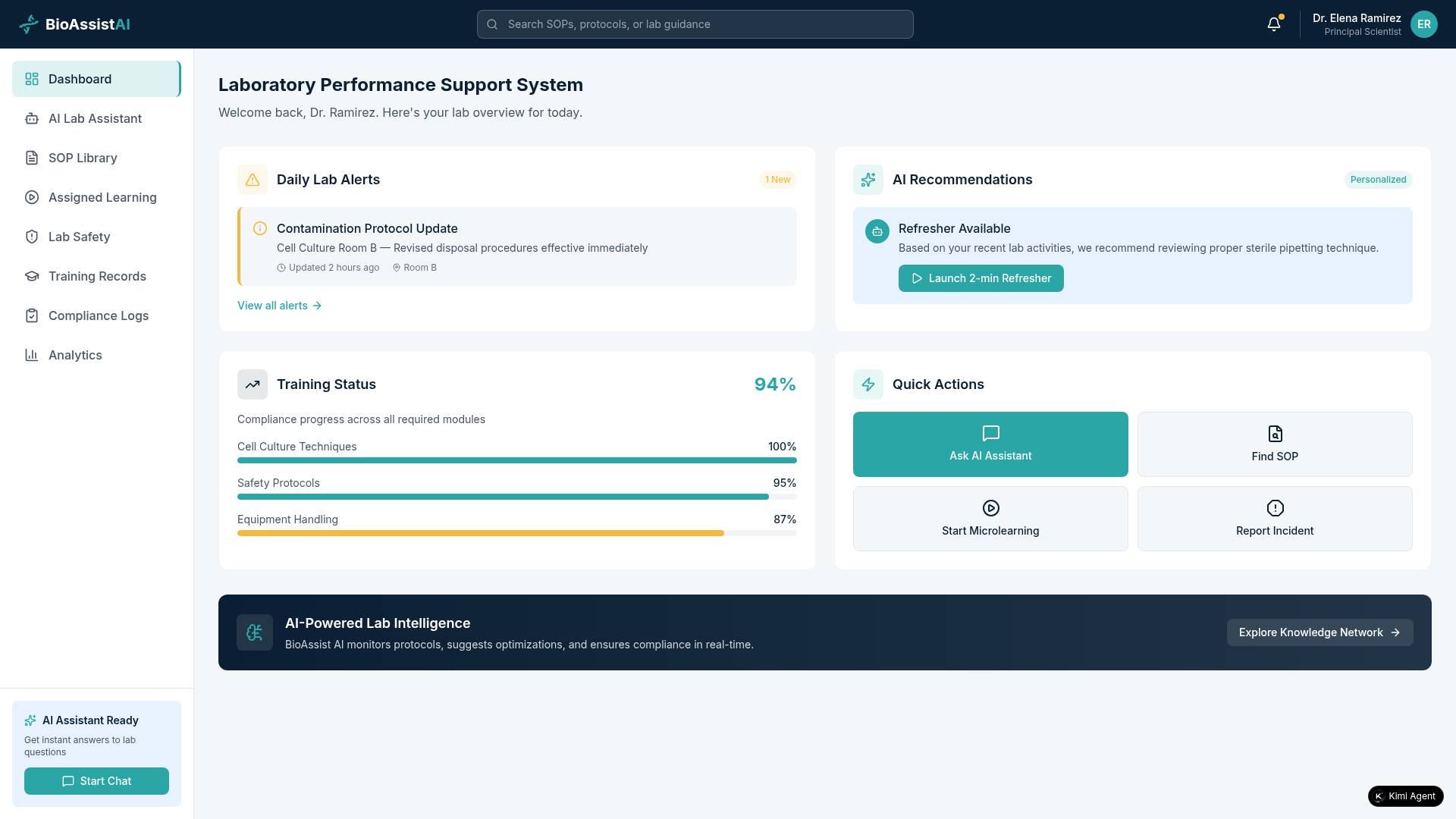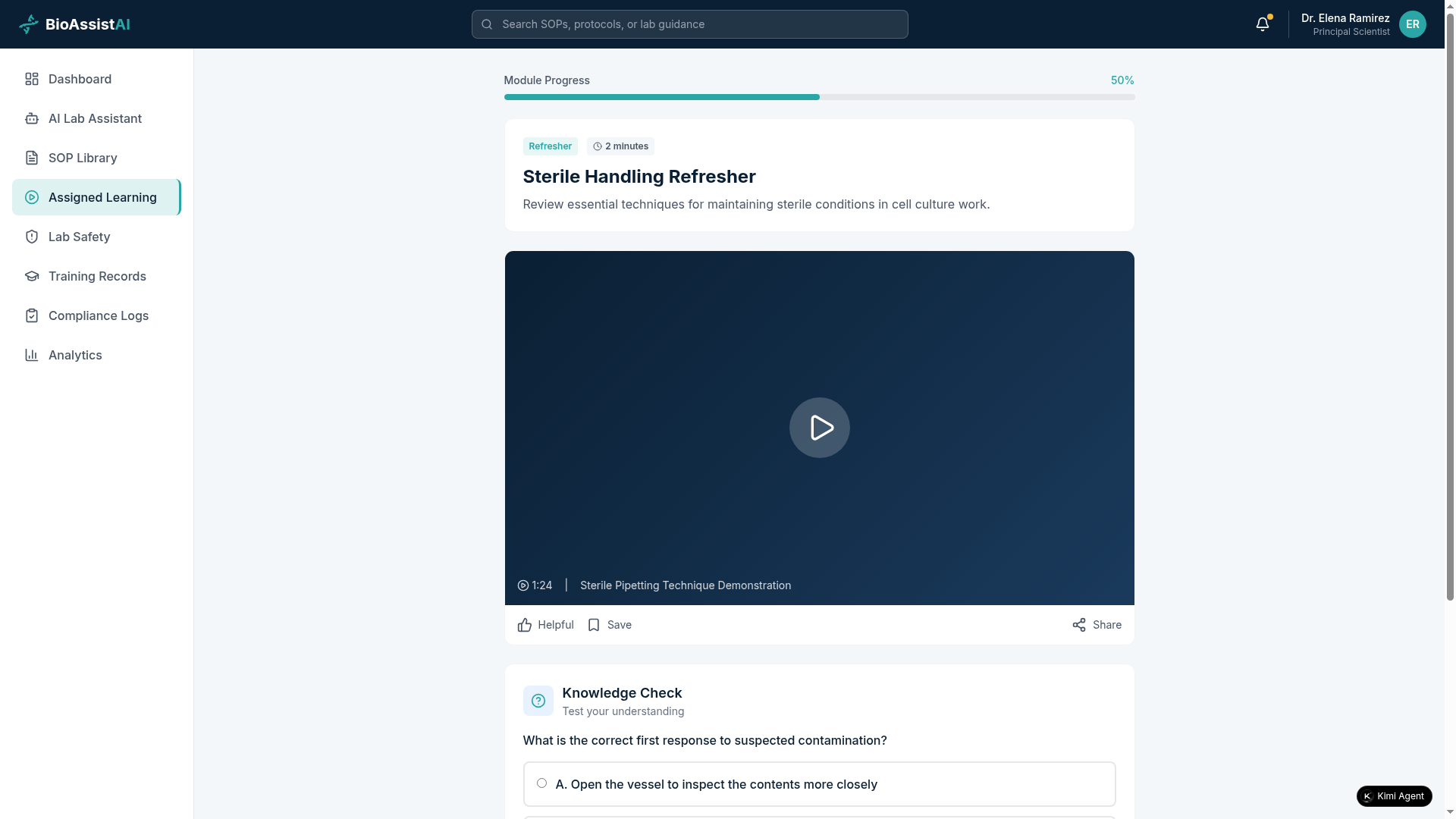
This interactive prototype demonstrates a compliance training and knowledge access hub designed for a biotechnology organization operating in a highly regulated environment. The system architecture and workflow were originally developed for an undisclosed biotech company. To protect confidentiality, all identifying information, company names, and proprietary materials have been removed or deactivated.
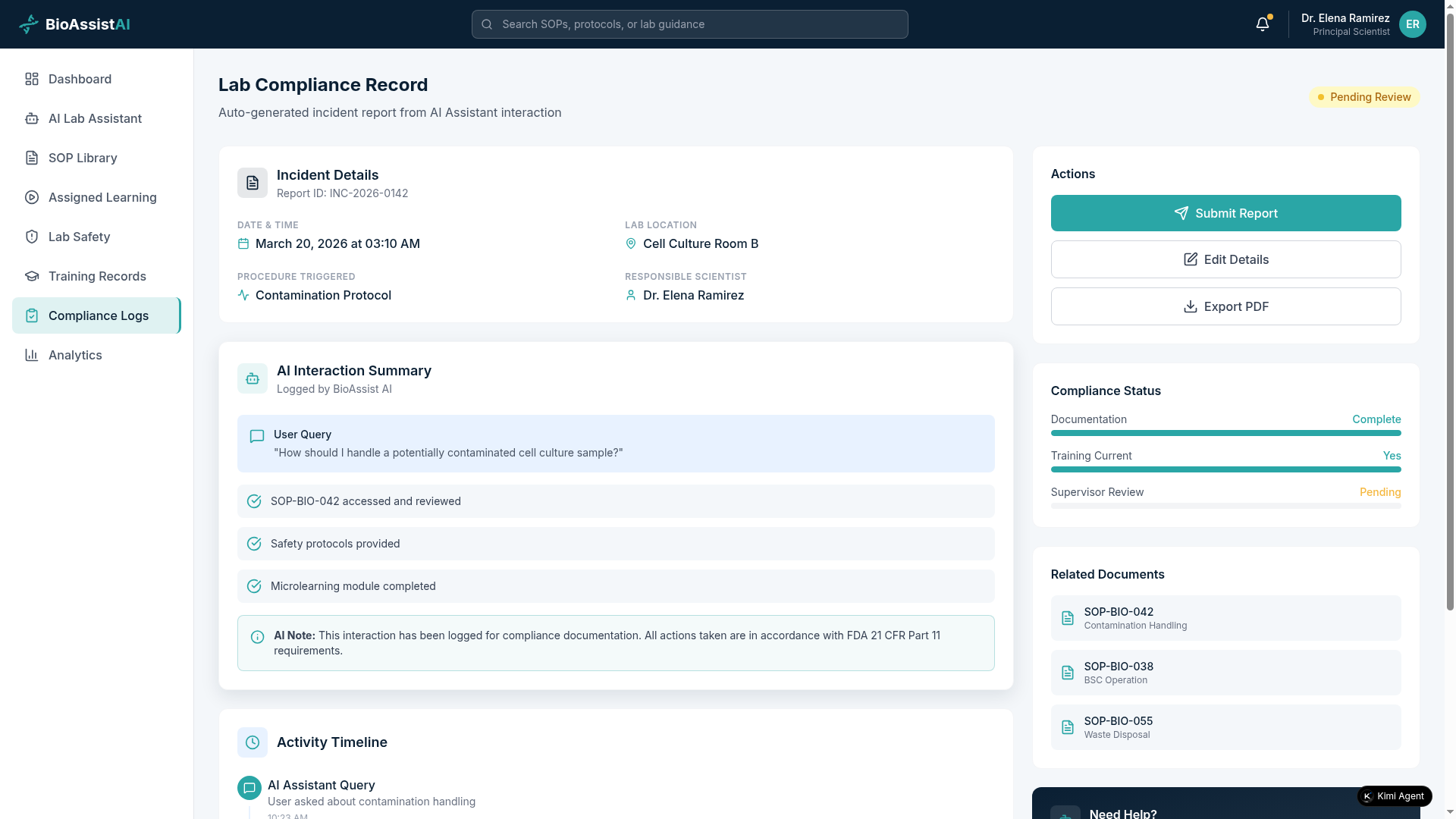
To view the interactive demo, click here. Screenshots are also provided below to highlight the main pages.
The purpose of this system was to create a centralized compliance learning environment tailored to individual employees. Each scientist, technician, and staff member accessed only the training modules, documentation, and compliance materials relevant to their specific role and responsibilities. This role-based design reduced information overload while ensuring that required regulatory training remained accessible and organized.
A key component of the platform was an internal AI-powered knowledge interface connected to the company’s compliance documentation library. This AI assistant operated entirely within the company’s secure internal environment, meaning that no data was shared externally. Scientists and lab personnel could search compliance protocols, regulatory requirements and internal procedures in natural language and receive guided step-by-step support while working through regulatory questions or laboratory workflows. This allowed employees to access compliance guidance at the moment of need, rather than relying solely on scheduled training events.
The system also maintained a comprehensive training record for each employee, automatically tracking completed modules, assessment scores and knowledge checks. Managers were provided with supervisory dashboards that allowed them to monitor team training progress, review compliance status, and assign additional training when needed. While the AI system could recommend training opportunities based on usage data, performance trends and compliance gaps, final assignment authority remained with the manager to ensure oversight and regulatory accountability.
For this particular implementation, the organization had an existing library of compliance training videos that were integrated into the platform as learning resources. While this approach allowed the company to leverage existing materials, I would recommend expanding the system to include scenario-based learning experiences that allow employees to practice decision-making in realistic laboratory situations. Scenario-based training can significantly improve knowledge retention and regulatory judgment in complex environments.
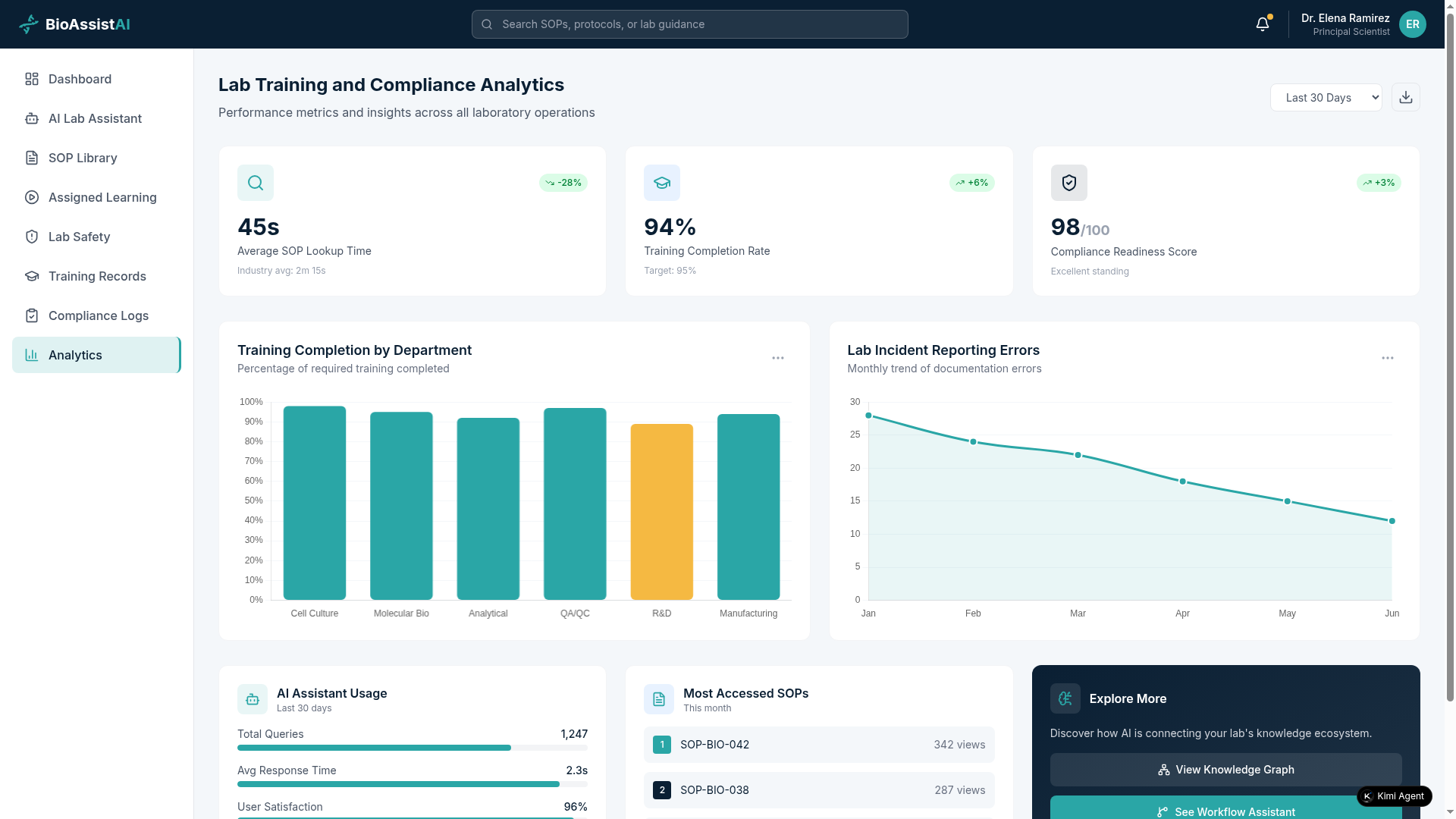
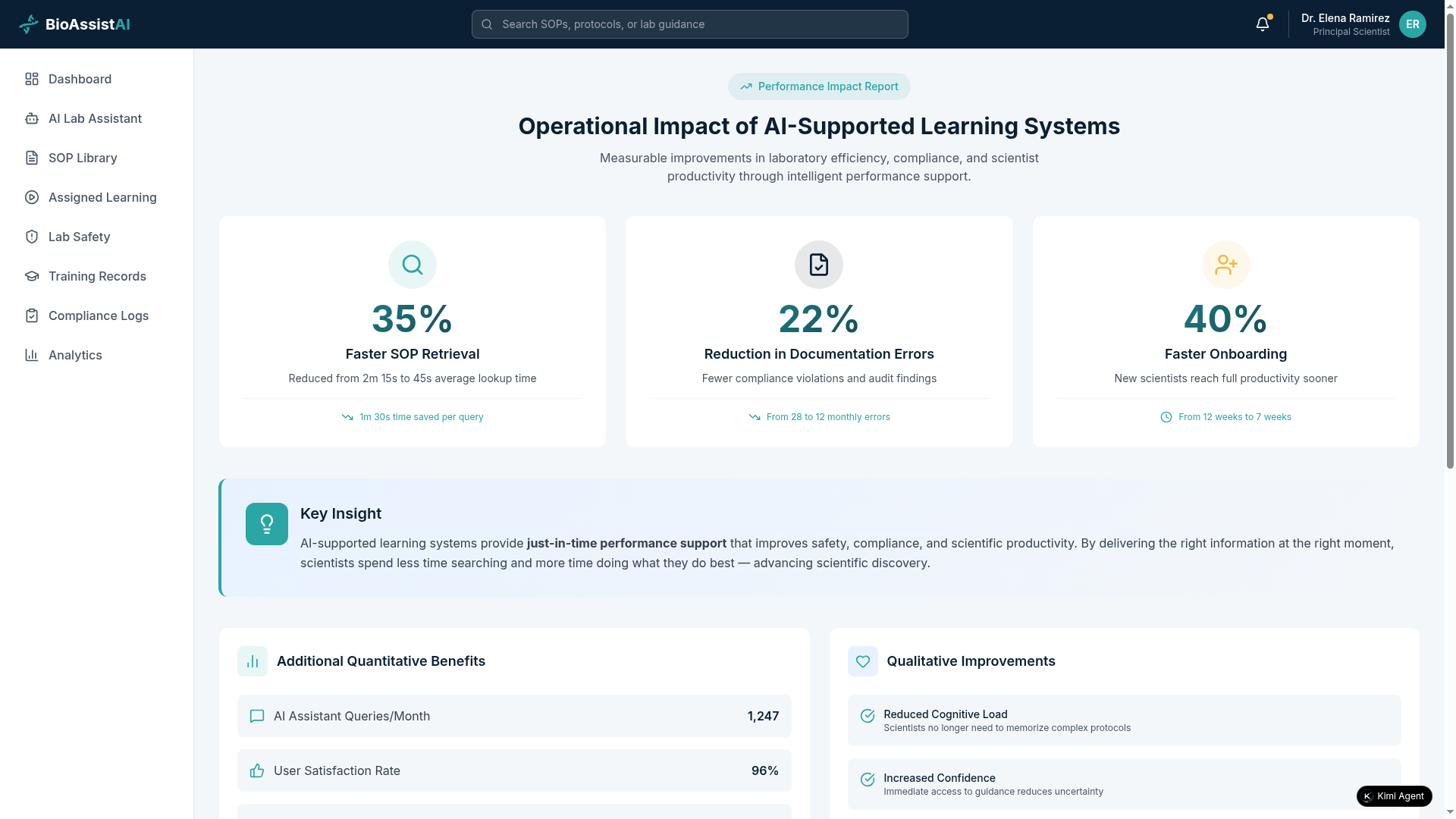
To evaluate the effectiveness of the system, a real-time analytics dashboard tracked employee performance metrics and compared assessment results against data from the organization’s most recent compliance audit prior to the introduction of AI-supported learning tools. These analytics provided leadership with immediate insight into training effectiveness, compliance readiness, and improvements in knowledge performance over time.